Flower Books: An Embroidery Designer’s Review for Branded Merchandise
When a small business owner asks me to evaluate a machine embroidery design for branded merchandise, I look at it through a very specific lens. It’s not just about decoration. It’s about whether that design can carry a brand’s personality across a tote bag, an apron, a cap, or a patch, and still look intentional, professional, and memorable. Flower Books immediately caught my eye with its promise of whimsy and charm. The title suggests a playful blend of literature and nature, and the description’s sentiment—stitch it on towels, pillows, home decor, or anything that requires a touch of whimsy—hints at a versatile, friendly motif. As a designer who regularly prepares digital embroidery file assets for small business merch, I knew I needed to put this design through a real-world commercial evaluation.
First Impressions and Visual Personality
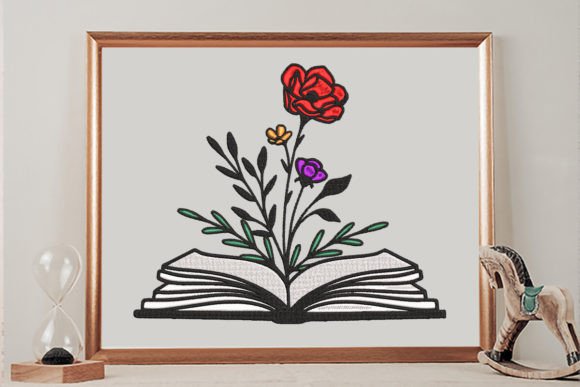
Opening the preview, Flower Books reads as a soft, approachable, and slightly rustic design. It feels handmade rather than corporate, and that’s a huge advantage for brands in the creative, lifestyle, and hospitality space. The name itself conjures images of stacked vintage books with blossoms tucked between pages. This kind of visual storytelling leans toward the handmade product aesthetic, making it a natural fit for businesses that want to communicate warmth, individuality, and a touch of storybook charm. It’s not overly elegant or formal, and it’s not aggressively bold. Instead, it sits comfortably in a friendly, decorative niche that can make a customer smile before they even read a logo.
For a brand identity that is rooted in the School category—think educational boutiques, children’s bookshops, stationery brands, or even a cozy café near a library—this design could become a signature mark. The Embroidery format gives it a tactile, textured finish that digital printing simply can’t replicate, and that tactile quality often signals higher perceived value.
Flower Books as a Branded Patch and Apparel Mark
One of the first tests I mentally run is the patch test. Could Flower Books work as a standalone embroidered patch? Absolutely. The motif likely has a central focal point that can be encircled by a neat satin border, making it perfect for patch production. A café could stitch it onto canvas aprons, a florist could add it to denim work shirts, and a craft studio could sell it as a sew-on patch for customers. Patches are such a powerful small business merch tool because they can be applied to almost anything: caps, backpacks, jacket sleeves, even product packaging.
As a chest logo accent, Flower Books would need to be scaled carefully. If the design contains intricate leaf veins, page lines, or tiny lettering, those details might close up when reduced to under 3 inches. I always advise testing at actual intended size before committing to a full production run. The charm of the design relies on legibility; if the core elements become a blur, the brand message is lost. For cap embroidery, the curved front panel can distort a design that is too wide or too detailed near the edges. A centered, compact version of Flower Books, however, could sit beautifully on a dad cap or a beanie, giving a subtle, branded accent that doesn’t scream for attention.
Real Business Applications for Flower Books
When I imagine a custom apparel order, I see Flower Books shining on a cream-colored apron for a bakery that emphasizes storybook recipes. I see it on a heavy canvas tote bag used as a gift with purchase at a boutique bookstore. The design’s whimsical quality makes it an excellent choice for event merchandise—think book fairs, creative workshops, or pop-up markets. Even a handmade product seller on Etsy could incorporate it into a product label sew-on tag, instantly elevating the perceived value of their goods.
Here are a few concrete business scenarios where Flower Books can become a visual asset:
- Staff uniforms: A small puff embroidery on the sleeve of a chambray shirt for a florist shop.
- Apron embroidery: A central chest motif on a bistro apron for a café with a literary theme.
- Tote bag design: A large placement on the front of a reusable organic cotton bag, paired with a simple brand name underneath.
- Product packaging accents: A stitched patch sewn onto a fabric gift wrap or a product sleeve.
- Customer gifts: A limited-edition embroidered keychain or luggage tag using a miniaturized version of the design.
- Printable mockup support: The design can be digitized and placed into lifestyle mockups for pre-sale listings, helping customers envision the finished product.
In each case, Flower Books acts as a visual connector. It tells the customer that this brand cares about the details, and that small, charming touches are part of the experience.
Practical Embroidery Considerations for Production
From a technician’s perspective, there are a few non-negotiables before using Flower Books in a commercial embroidery setting. The original description doesn’t list stitch density, hoop size, or specific file format, so I strongly recommend reaching out to the supplier for that information. A design that looks airy and light on screen might have a surprisingly high stitch count once converted, which can affect production time and fabric compatibility.
Here is my standard checklist when evaluating any embroidery file for business use:
- Test in black and white first. Remove all thread colors and see if the design still holds its shape and intention. If it becomes an unrecognizable blob, it needs simplification.
- Check the smallest recommended size. Many designs are digitized for a 5x7 hoop, but your patch might need to be 2.5 inches. Ask if the file includes a scaled-down version or if it can be resized without losing integrity.
- Review thread color contrast. Flower Books probably relies on soft pastels or earthy tones. On dark uniforms, those colors might need to be swapped for higher contrast to maintain visibility.
- Inspect spacing and outlines. Overlapping elements can cause puckering if the stabilizer isn’t right. A tote bag with a loose weave will need a very different stabilizer than a tightly woven apron.
- Confirm hoop size. Ensure the design fits within the hoop you plan to use, with enough clearance for proper hooping technique.
- Test on real fabric. A mockup is essential. Run a sample on the exact material you’ll use for the final product, and wash it multiple times to check durability.
- Create a mockup for client approval. Even a simple digital preview can prevent miscommunication about placement and scale.
- Compare beside other design assets. If the brand already has a logo, see how Flower Books sits next to it. They should complement each other, not compete.
- Confirm commercial licensing. Never assume a design file is cleared for commercial embroidery use. Check the license to ensure you can sell items with this design on them.
One potential concern with a design named Flower Books is the presence of tiny text or intricate book details. If the design includes the words “Flower Books” in a small font, cap fronts and patches could turn those letters into a muddy mess. I would advise looking at the lettering size and, if necessary, using the design without the text or asking the digitizer for a text-free version.
Brand Identity and Customer Perception
An embroidered mark like Flower Books does more than just sit on a garment. It communicates a brand’s essence at a glance. For a bakery, it might say “we value tradition and storytelling.” For a florist, it bridges the gap between nature and craftsmanship. The tactile quality of embroidery adds a layer of authenticity that a printed logo can’t match. Customers perceive embroidered products as more durable, more thoughtful, and often more premium. This perception directly influences buyer engagement and can justify a higher price point for your handmade product or boutique merchandise.
When a brand uses Flower Books consistently across custom apparel, tote bag design, and even packaging, it builds visual consistency. A customer who sees the same friendly floral-book motif on a shop’s apron, its paper bags, and the staff’s caps will start to associate that mark with positive experiences. That’s the foundation of customer trust and recognition. It also makes the brand more memorable in a crowded market. The whimsical, slightly nostalgic feel of Flower Books can set a business apart from competitors who rely on generic, minimalist logos.
When to Use Flower Books with Caution
No design is universally perfect, and Flower Books has a few natural limitations. Because of its likely decorative and detailed nature, I would avoid using it at extremely small sizes—under 2 inches—especially on textured fabrics like terrycloth towels. The description mentions towels, but if the design has fine details, they might get lost in the pile. A low-stitch-count version might be necessary. For cap embroidery, a stiff, structured cap front can handle moderate detail, but an unstructured cap might cause the design to pucker.
If your brand identity leans heavily toward sleek, modern, or corporate minimalism, Flower Books might feel too ornate. It’s better suited to brands that embrace a handmade, craft, or story-driven aesthetic. Also, if the design includes very light colors, consider how they will appear on a dark uniform after repeated washing. Dye migration and fading can dull the impact over time. A good polyester thread and a quality backing can mitigate this, but it’s worth testing.
Finally, always check the digital embroidery file format. Some machines require specific formats, and while the description says “this machine embroidery design comes with mu,” it’s likely a truncated sentence. Clarify with the supplier whether you’ll receive multiple formats, what the stitch count is, and whether the design has been tested on various fabrics. Don’t rely on assumptions.
Final Verdict from a Designer’s Perspective
After examining Flower Books from a business owner’s point of view, I can say with confidence that it’s a charming, versatile machine embroidery design that can serve as a lovely branding element for the right small business. It’s not a one-size-fits-all solution, but for a brand that wants to tell a story, evoke warmth, and create a cohesive collection of small business merch, it’s a strong candidate. Whether you’re dressing your team in apron embroidery, stitching a signature embroidered patch, or crafting a line of tote bag design products, Flower Books can add that touch of whimsy that turns a simple item into a conversation piece.
Remember to treat it as a design asset that needs testing, scaling, and thoughtful placement. Check the hoop size, order a sample, and create a mockup. With the right preparation, Flower Books can blossom into a recognizable part of your brand’s visual identity, helping you build trust, stand out, and delight your customers at every stitch.