Floral Nurse: A Designer’s Review for Boutique Sweatshirts
First Impressions: The Mood and Layout of Floral Nurse
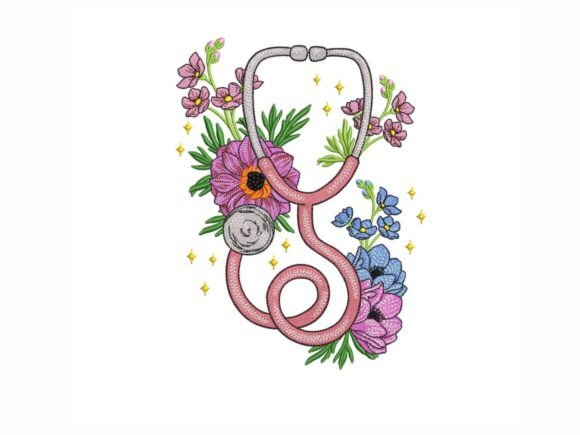
Opening the embroidery file for the first time, I immediately felt the care woven into this piece. Floral Nurse is not just a generic medical symbol; it’s a warm, heartfelt tribute designed with a soft botanical touch. The central motif—a stethoscope gently curved among blooming flowers—creates a layout that feels organic, almost like a hand-drawn wreath. The petals and leaves frame the instrument beautifully, striking a balance between professional recognition and personal tenderness. For a boutique sweatshirt project, this mood is gold. It reads as decorative yet deeply meaningful, making it ideal for a limited drop that celebrates healthcare workers, nursing students, or anyone who wants to wear their gratitude with style.
The stitch personality here leans toward the feminine side without being overly delicate. The floral elements can be embroidered with blended thread colors that shift from petal to petal, while the stethoscope requires crisp, clean lines to maintain its identity. As a designer, I can already see how this design would look on a finished product: the flowers softening the technical tubing, and the whole composition radiating a sense of calm confidence. It’s cute, it’s premium, and it carries a rustic charm that works across multiple seasons and styles.
How Floral Nurse Translates to Sweatshirt Embroidery
When I evaluate a machine embroidery design for sweatshirt application, I always run through a mental checklist of fabrics and placements. Floral Nurse passes with flying colors on almost every front. Let’s start with neutral sweatshirts—think cream, oatmeal, or light heather gray. On these, the floral hues pop without overwhelming the eye. A pastel pink or lavender sweatshirt becomes a canvas for a monochromatic thread palette, elevating the design into something ethereal and feminine. On the other hand, a dark fabric like navy, charcoal, or deep forest green demands thread color contrast that still feels harmonious. I’d test a soft gold, blush, or ivory thread set against the dark ground to keep the design readable and luminous.
Placement is everything in boutique hoodie design. The chest position—roughly 3 to 4 inches wide—is the classic choice for a cozy, oversized hoodie. It gives the embroidery a prominent but not abrasive presence. I can also imagine Floral Nurse as a sleeve accent, scaled down to about 2 inches, where the floral wreath wraps subtly around the stethoscope. For a back design, a larger file version would make a stunning statement piece on a relaxed-fit sweatshirt, especially when paired with a minimal front logo. The design’s circular flow naturally suits a center-chest or upper-back placement. Regardless of the spot, the final product will look intentional, not like a random patch slapped on.
The stitching personality shifts slightly depending on the fabric texture. A plush French terry sweatshirt will absorb some of the thread definition, giving the design a slightly softer, vintage feel. On a smoother fleece, the lines stay crisp, ideal for a more polished boutique look. Seasonal apparel collections—think cozy autumn releases or spring nursing appreciation drops—will benefit from the design’s versatility. It’s not overly seasonal; it’s a year-round sentiment wrapped in blooms.
The Boutique Brand Appeal: Elevating a Small Shop Product
For Etsy sellers, handmade business owners, and small apparel decorators, Floral Nurse is the kind of design asset that can define a collection. When you’re building a brand around meaningful, high-quality custom apparel, every embroidery file you choose must do more than just look pretty—it must tell a story. This design tells a story of care, dedication, and beauty. A sweatshirt bearing this embroidery becomes more than clothing; it’s a wearable statement that connects with customers on an emotional level.
From a product value standpoint, adding Floral Nurse to a limited sweatshirt drop instantly justifies a higher price point. Customers perceive machine embroidery as a premium embellishment, and when the design is as thoughtful as this one, it reinforces trust in your brand’s taste. Lifestyle product photography of the finished piece—a model holding a coffee mug in a softly lit room, the embroidery catching the light—will draw engagement on social media and Etsy listings. Buyers are drawn to items that feel personal and giftable, and this design fits perfectly into the school, graduation, or thank-you gift category. Although the category listed is School, the design transcends a single occasion; it works beautifully for nursing school spirit wear, instructor appreciation, or even back-to-school season when a student is heading into a healthcare program.
Visual recognition is another key benefit. A cohesive brand identity often relies on a signature motif. Repeated use of Floral Nurse across multiple products—hoodies, totes, wall art—can make your shop instantly recognizable. It’s a rare design that can be both a bestseller and a brand builder.
Practical Production Considerations for Commercial Embroidery
Now let’s talk shop. As a designer who has ruined more than one sweatshirt by ignoring the basics, I always stress the importance of testing. Floral Nurse looks promising, but its success in a commercial embroidery run depends on a few critical factors.
Thread color contrast is the first challenge. The floral elements likely have multiple color stops; on a dark fabric, you’ll need to ensure the lightest petals don’t get lost, and on a light fabric, the outlines might need to be slightly darker to keep the stethoscope crisp. I recommend doing a test stitch-out on the exact fabric you’ll use for production. If the design relies on subtle tonal shifts, a high-contrast background might require adjusting the thread palette.
Stitch density and fabric thickness go hand in hand. Sweatshirt fabrics, especially loopback cotton and fleece, have nap and stretch. A dense design can sink into the nap or cause puckering if the underlay isn’t right. A good cut-away stabilizer is non-negotiable for knits; I’d use a medium-weight cut-away to support the embroidery without making the chest area stiff. The design’s floral sections might be airy and light, but the stethoscope tubing could require denser stitching to hold its shape. The balance here is delicate—too much density and the sweatshirt loses its softness, too little and the design looks amateurish after a few washes.
Small-size readability is another concern. Scale Floral Nurse down for a sleeve, and the stethoscope’s bell or the tiny flower centers might fill in with thread, turning into unrecognizable blobs. I’d be cautious about going below 2.5 inches wide unless the embroidery file was digitized with small-scale performance in mind. Always check the hoop size recommended by the digitizer; the description doesn’t specify exact dimensions, so you’ll need to verify the file’s native size and any sizing limitations before placing it on a hoodie.
Hoop placement on a finished sweatshirt can be tricky. Chest embroidery on a hoodie with a front pocket requires precise centering above the pocket. If the design is large, a back placement might need a larger hoop and a machine with enough clearance. I always use a printable mockup to audition the design on the actual garment template before hooping. This saves time and materials.
Washing durability is the final test. Because this design will likely be sold as a handmade product, customers will expect it to endure regular laundering. The digitizing must have proper trims and lock stitches to prevent thread tails from unraveling. The thread type matters too—polyester thread offers better colorfastness and strength than rayon, especially for a design that might be machine-washed frequently. If the original embroidery file doesn’t include a color sequence sheet, I’d strongly recommend asking the seller for one, or dissecting the file in your software to plan the stitch order.
Design Assets and the Final Product: From Mockup to Customer
One of the most exciting parts of launching a boutique sweatshirt is creating the listing imagery. Floral Nurse is a dream in this regard. A well-lit flat lay of the finished sweatshirt, with the embroidery in sharp focus, tells a story of quality. Lifestyle shots—a nurse walking into a hospital, a student on campus, a cozy scene at home—give the potential buyer a vision of how the garment fits into their life. The design’s floral softness photographs beautifully; it catches light and shadow in a way that a flat print never could.
For Etsy sellers, the digital embroidery file itself can be offered as part of a bundle, but in this context, we’re focused on the tangible product. The sweatshirt becomes a canvas for a sentiment that’s hard to put into words. Floral Nurse adds a layer of handmade authenticity that mass-produced graphic tees lack. When a customer receives a neatly embroidered hoodie with this design, the tactile quality immediately signals care and craftsmanship. That builds repeat business and word-of-mouth marketing stronger than any ad.
If your shop leans into the “School” category, consider pairing the sweatshirt with a matching tote bag or a mug featuring the same embroidery file. It’s a smart way to create a collection around a single design asset. The school nurse, nursing instructor, or proud parent of a nursing student will appreciate the thoughtful coordination.
What Every Embroidery Designer Should Double-Check Before Stitching
As much as I love the look of Floral Nurse, I always remind fellow designers and shop owners to dig into the technical details before committing to a full production run. The product description mentions “This mach…” which suggests the information might be incomplete. Don’t assume anything. Verify the embroidery file format required for your machine—whether it’s .DST, .PES, .EXP, or another—and ensure the design is compatible with your software. The hoop size listed in the file properties must match your machine’s capabilities; if the design is larger than your largest hoop, you’ll need to split it or find a smaller version. Stitch count is another practical metric: a higher stitch count means longer run time and more thread, but it can also affect the garment’s feel. Check if the design includes a color change sheet or if you’ll need to map thread colors manually.
License terms are equally important for commercial embroidery. The original artist may have restrictions on reselling the digitized design as part of a physical product. While the description says it can be used for apparel and gift items, always confirm that commercial use is allowed, especially if you’re building a boutique brand around it. Nothing breaks trust faster than a copyright claim after you’ve already invested in inventory.
Final Thoughts on the Design’s Place in a Boutique Lineup
After a thorough evaluation, Floral Nurse earns a confident spot in my recommended design assets for any small shop focused on heartfelt, wearable art. It checks the boxes for mood, versatility, and brand-building potential. It’s not a basic, clip-art nurse design; it’s a carefully composed piece that blends the clinical with the natural in a way that feels both modern and timeless. Whether you’re planning a cozy sweatshirt drop for the holiday season, a back-to-school nursing collection, or a year-round appreciation line, this embroidery file will elevate your finished product above the noise of generic apparel. Just remember to test your thread colors, choose the right stabilizer, and respect the digitizing limits—and you’ll have a sweatshirt that customers will cherish long after the unboxing.