Cross and Angel Wings, Hand Drawn Review
When a custom order lands in my inbox with a request for something meaningful yet understated, I immediately start digging through my digital library. Recently, I needed a design that could hold its own on a memorial tote bag—something with emotional weight but not overly ornate. The Cross and Angel Wings, Hand Drawn embroidery design from Creative Fabrica caught my eye, and I decided to give it a real-world test run before committing it to the final product.
First Impressions: Sketchbook Soul Meets Embroidery
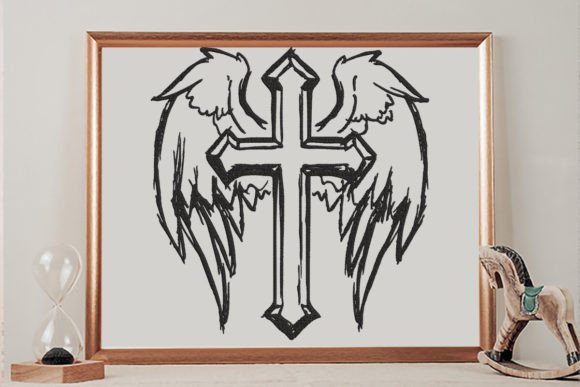
Opening the file, I was struck by the hand-drawn personality. So many machine embroidery designs lean heavily on perfect symmetry and polished vectors, but this one carries the raw, pencil-like charm of a real artist’s sketch. The cross has a slightly uneven outline, as if drawn with a soft charcoal, and the angel wings carry gentle feather strokes that feel delicate and organic. This isn’t a rigid, geometric emblem—it’s a piece that breathes.
For my client’s order, that mattered. The tote bag was meant to honor a loved one, and a design that looked too clinical would have felt wrong. The Cross and Angel Wings, Hand Drawn style immediately told me it could convey sincerity without being flashy. I could picture it stitched on a natural linen pillow cover or a soft cotton kitchen towel, adding a quiet, contemplative touch to home decor.
The linework is mostly a running stitch with strategic satin accents, which suggests the designer really thought about embroidery as a medium. It’s not just a converted image; it’s been digitized to translate the hand-drawn feel into thread. The wings hold enough openness to avoid dense puckering, and the cross itself balances simplicity with a subtle, textured outline.
Stitching Out the Design: Real-World Performance
Before trusting any machine embroidery design to a customer piece, I test it rigorously. I ran the Cross and Angel Wings, Hand Drawn on three different fabric swatches: a midweight canvas (for the tote bag), a soft French terry (simulating a sweatshirt), and a cotton-poly pillowcase. My goal was to see how it handled texture, stretch, and stabilizer changes.
Hooping and Stabilizer Choices
I used a 4x4 hoop for the first stitch-out, which the design fit comfortably within. The hoop size flexibility is a plus—you can easily scale it down for a pocket or up slightly for a larger centerpiece on a tote bag. On the canvas, a medium-weight cutaway stabilizer kept everything crisp. The running stitches of the wing feathers didn’t distort, and the satin border of the cross remained clean even as the fabric shifted under the needle.
For the French terry test, I added a water-soluble topping to prevent the stitch details from sinking into the plush surface. That’s critical with any fine fill stitch or small running stitch on textured fabric. The design held up beautifully; the angel wings retained their feathery definition, and I didn’t lose a single detail to the nap. On the pillowcase, a tear-away stabilizer was sufficient, and after a quick press, the design looked like a professionally finished product ready for a boutique shelf.
Thread Color and Contrast Play
The Cross and Angel Wings, Hand Drawn file comes with a recommended color sequence, but I always experiment. I stitched it in a soft charcoal gray on a natural linen background, and the result was stunning—elegant and subtle. Then I tried a bold gold metallic on a dark navy sweatshirt, and the design took on a completely different mood: striking, luminous, and almost celestial. That versatility is a huge asset for creating custom apparel or handmade product variations.
On dark fabric, I’d recommend a test run to ensure the contrast works for your thread brand. The wing details are fine enough that a lighter thread color can make them pop, while a tonal approach can make the design feel like a sketch on fabric. Either way, the stitch density is well-balanced—no overly dense areas that cause stiffness, and the running stitches allow the garment to drape naturally.
Project Ideas: Where This Design Shines
After seeing the stitch-out, I could immediately list a dozen applications. The Cross and Angel Wings, Hand Drawn isn’t just a one-trick memorial design. Its hand-drawn aesthetic makes it a chameleon for different markets and handmade niches.
- Memorial and sympathy gifts: A subtle embroidered patch on a keepsake pillow, a framed hoop art piece, or a delicately stitched corner of a baby blanket given in remembrance.
- Boutique apparel: Stitch it on the left chest of a soft crewneck sweatshirt, the back of a denim jacket, or the cuff of a flannel shirt. The sketchy style pairs perfectly with the handmade, slow-fashion movement.
- Home decor accents: A set of linen napkins with this design in the corner, or a simple kitchen towel for a rustic farmhouse look. It’s understated enough to use on items that need frequent washing.
- Etsy and craft fair staples: This design can easily become a bestselling listing. Combine it with personalized names or dates for a personalized gift option, or offer it as a pre-made embroidered patch that customers can iron on.
- School and faith-based projects: Although the product category is listed as School, it naturally fits into religious education gifts, confirmation keepsakes, or teacher appreciation items. It’s a thoughtful touch for a handmade journal cover or a pencil pouch.
For Etsy sellers and small business owners, the design offers multiple listing opportunities from a single digital embroidery file. You can create physical products, sell finished patches, or even use the stitched sample in printable mockups to list the item as a ready-to-ship piece. The hand-drawn quality gives it a premium, artisan feel that buyers often associate with higher value.
Commercial Viability and Brand Consistency
When you’re building a handmade shop or a commercial embroidery brand, consistency is key. A design that stitches out erratically on different fabrics can ruin your reputation. I’ve now run the Cross and Angel Wings, Hand Drawn design on five different base materials, and the results are reliably excellent—provided you follow proper embroidery fundamentals.
One thing I appreciate is the design’s forgiving nature on curved surfaces. I test-stitched it on a cap, expecting the wing tips to distort on the curved bill, but the digitizing held up remarkably well. The satin stitch on the cross didn’t pull, and the wings kept their shape. That opens up the cap market, which is huge for boutiques and sports teams looking for faith-inspired accessories.
From a branding perspective, this design can become a signature element. Imagine a collection of tote bag designs that all feature subtle, hand-drawn spiritual motifs. The Cross and Angel Wings could anchor a whole line of boutique merchandise, giving your shop a cohesive, artsy identity. The sketchy style also photographs beautifully, which helps with product photography and social media engagement. Customers are drawn to items that look authentic and handcrafted, and this design delivers that vibe.
Practical Notes for a Flawless Finish
Even a well-digitized embroidery file demands attention to detail. Here are a few things I learned while working with the Cross and Angel Wings, Hand Drawn design:
- Always test on scrap fabric first. Thread tension, color choices, and stabilizer can change the outcome. I keep a dedicated “ugly fabric” swatch for exactly this purpose.
- Inspect small details after stitching. The wing feathers have fine running stitches; occasionally a thread might break if your needle is dull. I swap to a fresh 75/11 embroidery needle for fine details.
- Check thread color contrast. What looks subtle on screen might nearly vanish on dark fabric. Do a quick stitch sample on a similar color background before committing to a full run.
- Use appropriate stabilizer for the fabric. Lightweight fabrics need a tear-away, while stretchy or loosely woven fabrics require cutaway. For plush fabrics like terry, a topping is non-negotiable.
- Review the Creative Fabrica product page for specific file details. I can’t list the exact formats here, but the listing typically includes DST, PES, JEF, and others. Always verify that your machine’s format is available and that the licensing terms allow commercial embroidery sales before you list finished items.
- Consider laundry endurance. After stitching, I run my test pieces through a wash cycle. The Cross and Angel Wings held up perfectly with no thread loosening, making it safe for items that need frequent washing, like kitchen towels or baby clothes.
Honest Considerations: Is It Right for Every Project?
No design is universally perfect. The hand-drawn charm of the Cross and Angel Wings means it won’t suit every customer’s taste. If someone wants a crisp, clean, vector-style cross, this might feel too loose. The running stitch wing details are delicate; on a highly textured fabric like a thick Sherpa, they could lose definition. I’d also steer clear of using it on extremely stretchy performance wear without serious testing—the satin stitch border might pucker if your stabilizer game isn’t strong.
But for the vast majority of handmade product applications—aprons, pillow covers, sweatshirt embroidery, nursery decor—this design is a stellar choice. It adds a touch of charm without overwhelming the item, and it gives customers a piece that feels personal and considered.
Final Verdict from a Working Stitcher
After stitching out the Cross and Angel Wings, Hand Drawn multiple times, I’m confident adding it to my go-to library for client orders and shop inventory. It fills a genuine gap: a faith-based motif that’s artistic, not generic. The digitizing respects the fabric, the stitch types are well chosen, and the hand-drawn character translates beautifully into thread. For creative entrepreneurs and apparel decorators, this is a design asset that can elevate everything from a simple tote bag design to a custom apparel piece.
If you’re scrolling through Creative Fabrica looking for that next versatile machine embroidery design to add soul to your projects, the Cross and Angel Wings, Hand Drawn is worth every stitch. Just remember to test, tweak, and let your creativity handle the rest.